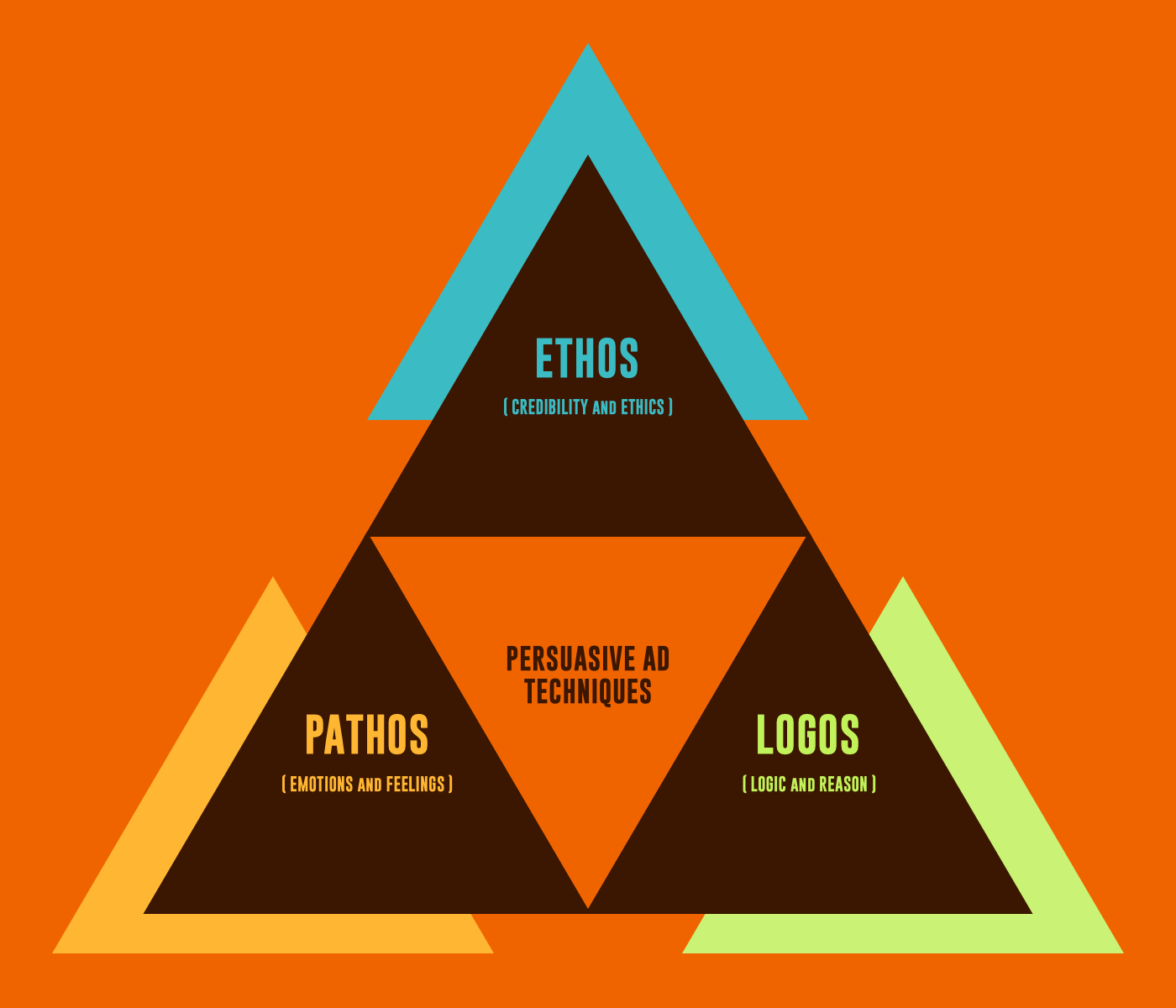
“The Definitive Guide to Ethos, Logos and Pathos.” StudioBinder, StudioBinder, 12 Dec. 2018, http://www.studiobinder.com/blog/ethos-pathos-logos/.
So far my understanding of ethos, logos, and pathos is limited to what they are and how to identify each one. I myself don’t think I incorporate these ideas into my papers intentionally, they flow out naturally just writing. I believe that without the current chapter we have read my understanding would continue to be minimal. However I think I can learn how and why incorporating these ideas through out text can strengthen, or weaken a paper.
I have noticed recently that lots of ads don’t go for a logical appeal, but more pathos or ethos. It seems weird that we as people don’t make decisions based on facts, but we see some ad talking about like, “We are better than the other brand give us your money.” Other places I have seen these ideas practiced are in small news outlets, like some youtuber (YongYea for example: https://www.youtube.com/channel/UCT6iAerLNE-0J1S_E97UAuQ) reporting the recent news on some Game company selling out. They often take the time out of their day to write a professional and developed script full of facts and keep their opinion out as much as possible, and if what they share is their opinion they tell you. I think it’s backwards that some unprofessional blogger can appeal to logos of situation much better than a business, but if emotional and ethical appeal make the money, who am I to say no?
Ethos, Logos, and Pathos are used everyday almost unknowingly by everyone, like when you try to convince somebody to do something for you you appeal more as to why they should help you because it makes them a good person. As for our next assignment and analyzing rhetorical practices throughout the soundtrack of Hamilton, I believe I will find that these songs have a lot more literary depth than they seem like they do, and how they not only use logos and ethos to make you pick a side of the story to gravitate towards, but also pathos to give an attachment to each character as a person.
 Bishop's Blog