In English 1302 this week we started studying Shakespeare. We have gotten a brief synopsis of Macbeth and learned about some of the characters and how their designs give away who they may be. Specifically I feel like we have talked the most about the visual notes of characters and how their design gives away who they are, tying to our previous visual rhetoric essay.
In class we argued about what makes a character appear the way they do. We drew a character from a list and argued why we drew them the way we did, and how the way they were drawn accurately or inaccurately portrayed them the way we visualized them. Royalty must have some sort of crown and a nice robe, peasants wear torn up clothes and don’t have shoes, noble knights show their faces, etc. There are key giveaways to a characters status simply based on appearance and I think that is what we trying to see in class last week.
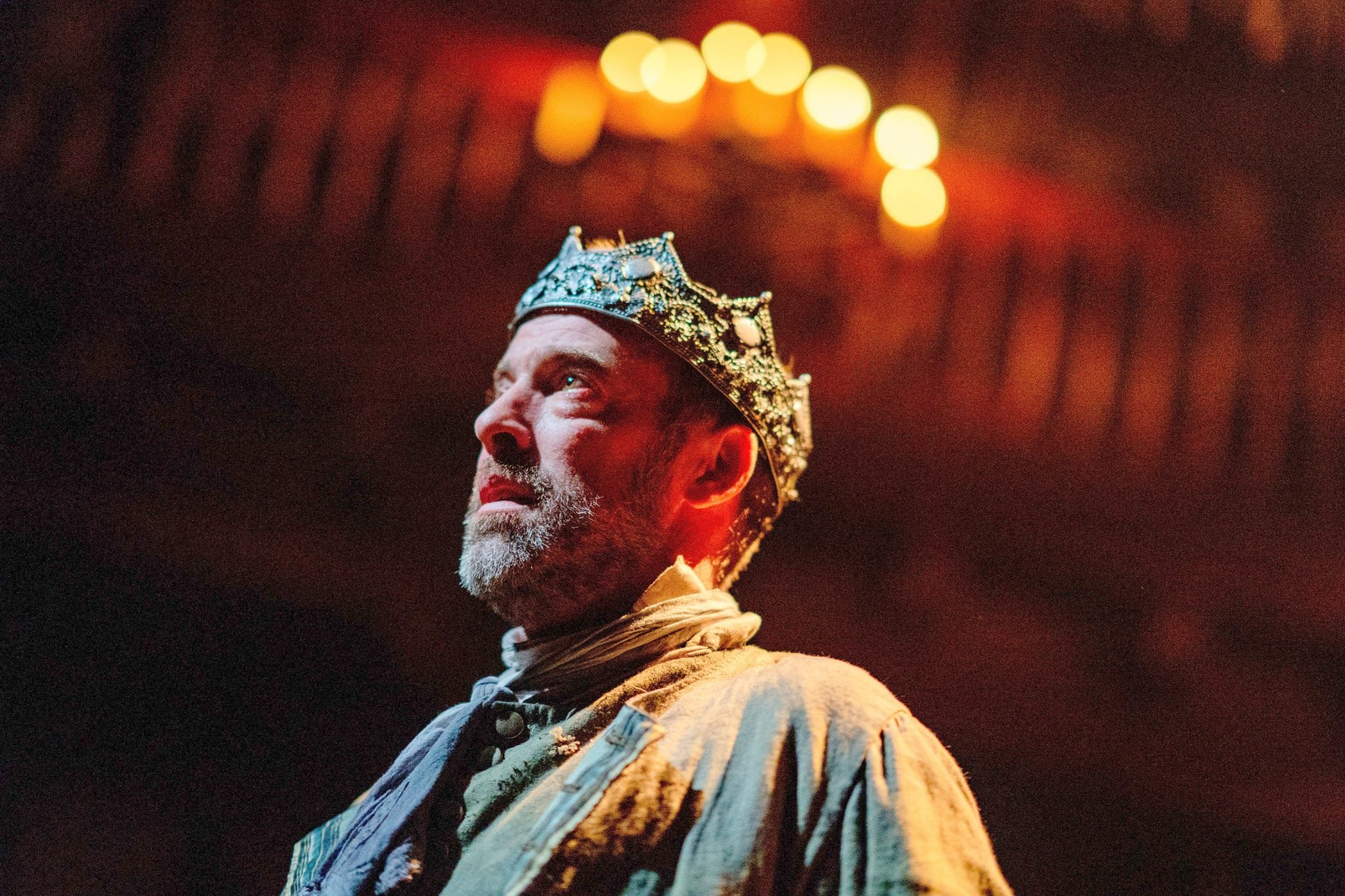
“Upon my head they plac’d a fruitless crown.”
Folger Theatre’s Macbeth. On stage September 4, 2018. Photo by Brittany Diliberto.
We recently started learning the rhetoric within Shakespeare plays in the class and I feel like in American schools we may focus too much on Shakespeare. People always complain in schools like, “Shakespeare is too hard and complicated.” I feel like we hold the work of him to such a high standard when Shakespeare’s works are full of jokes that would make 16th century teenagers snicker. Shakespeare is important for us learn and analyze not only because it can show the evolution of language, but also how simple sentences and phrases can carry enough irony or have a metaphor symbolizing something much greater. Especially in a rhetorical sense, Shakespeare is essential for learning how words make a character trust worthy, and how relationships can evoke strong emotion.
 Bishop's Blog